
City of Bristol Arrest Records and Court Charges
City of Bristol arrest records begin with the arrest event. They may connect to Bristol Police information, an arrest blotter entry, incident number, arrest date, arresting officer, charge descriptions, and later court activity. That arrest-side record is not the full criminal case file. Once the prosecutor proceeds with formal charges, the charge record moves through Superior Court and appears in criminal and motor vehicle docket tools where public.
The police record, custody record, and court charge record answer different questions. The arrest record explains the police event. Custody records identify whether a person is in Connecticut Department of Correction custody. Court charge records show the complaint, information, indictment, charge status, docket path, and outcome in the court case. For jail status, use inmate records; for the full case file and sentencing, use City of Bristol criminal court records.
Find Bristol Arrest Records and Charges
The Bristol Police Arrest Blotter publishes daily PDF arrest logs. Those logs are summaries, not complete police reports and not court case files. The Bristol Police Records Division handles police report requests, local criminal record checks, accident reports, and related records. Police states that reports containing arrest information are not released until all charges have been adjudicated in court.
- Check the Bristol Police Arrest Blotter for a public daily arrest-log summary.
- Use the Judicial Branch criminal and motor vehicle docket tools to find pending charges, court dates, convictions, or docket-number results.
- Read each charge separately because one arrest can produce multiple counts with different outcomes.
- Contact Bristol Police Records for eligible police reports, keeping in mind the adjudication rule for arrest reports.
- Contact the Clerk of the Superior Court for certified court copies, disposition entries, or documents not shown online.
The Bristol Police Records Division source is the official local page for police report rules and records contacts.
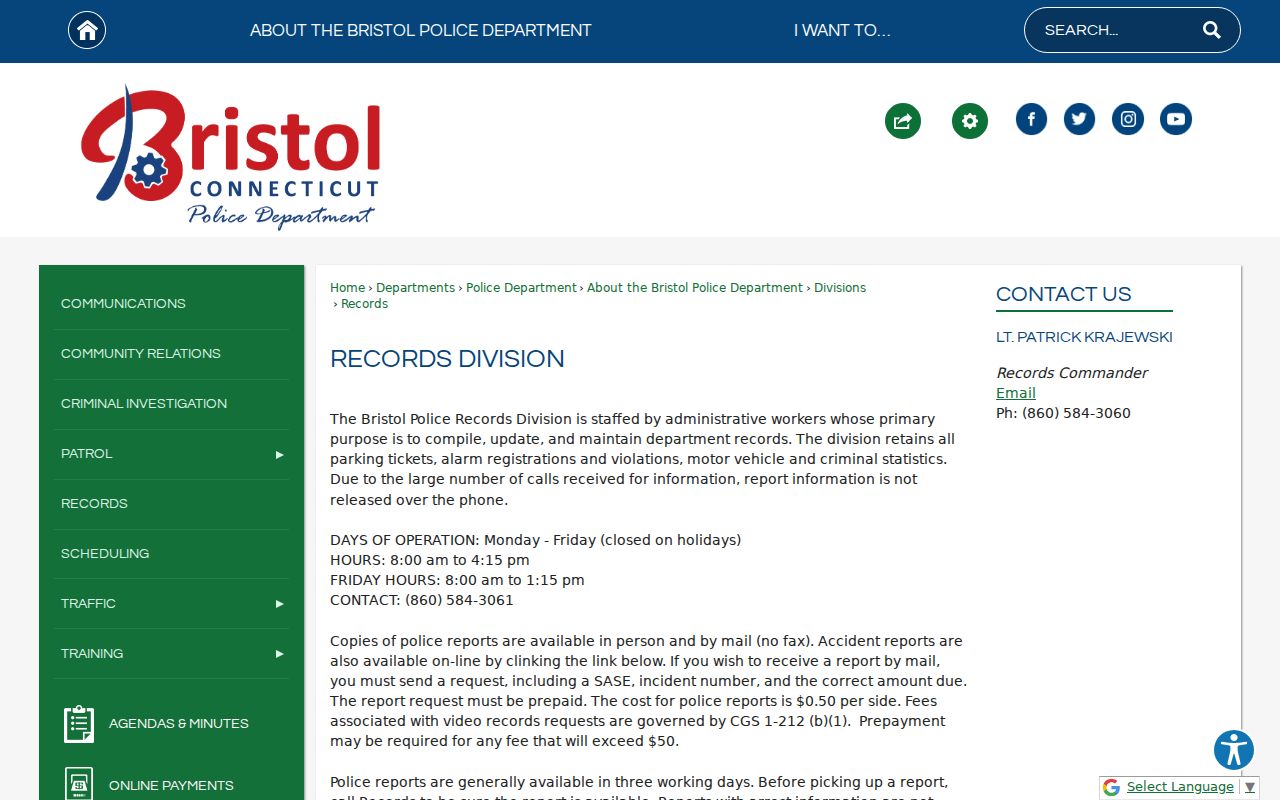
That records page is important because police report access has different rules from court docket access.
Charges After Arrest Documents
Charges after arrest enter the court record through charging documents. Connecticut prosecutors are State's Attorneys, not county district attorneys. Bristol is in the New Britain Judicial District. More serious Part A matters are handled by that district office, while geographical-area Part B prosecution covers many class C, D, and E felonies, misdemeanors, infractions, and motor vehicle offenses. The charge document is the bridge between the arrest and the court case.
| Document | Who Uses It | How It Affects the Charge Record |
|---|---|---|
| Complaint | Often based on officer or prosecutor allegations. | Starts or supports the court accusation after arrest or warrant activity. |
| Information | Prosecutor-filed charging document in many criminal cases. | Lists formal charges that the court tracks through the docket. |
| Indictment | Grand jury charging document for serious matters when used. | Brings formal charges into a higher-level criminal case path. |
The Bristol arrest blotter source shows the local arrest-log channel that may exist before a formal court outcome.
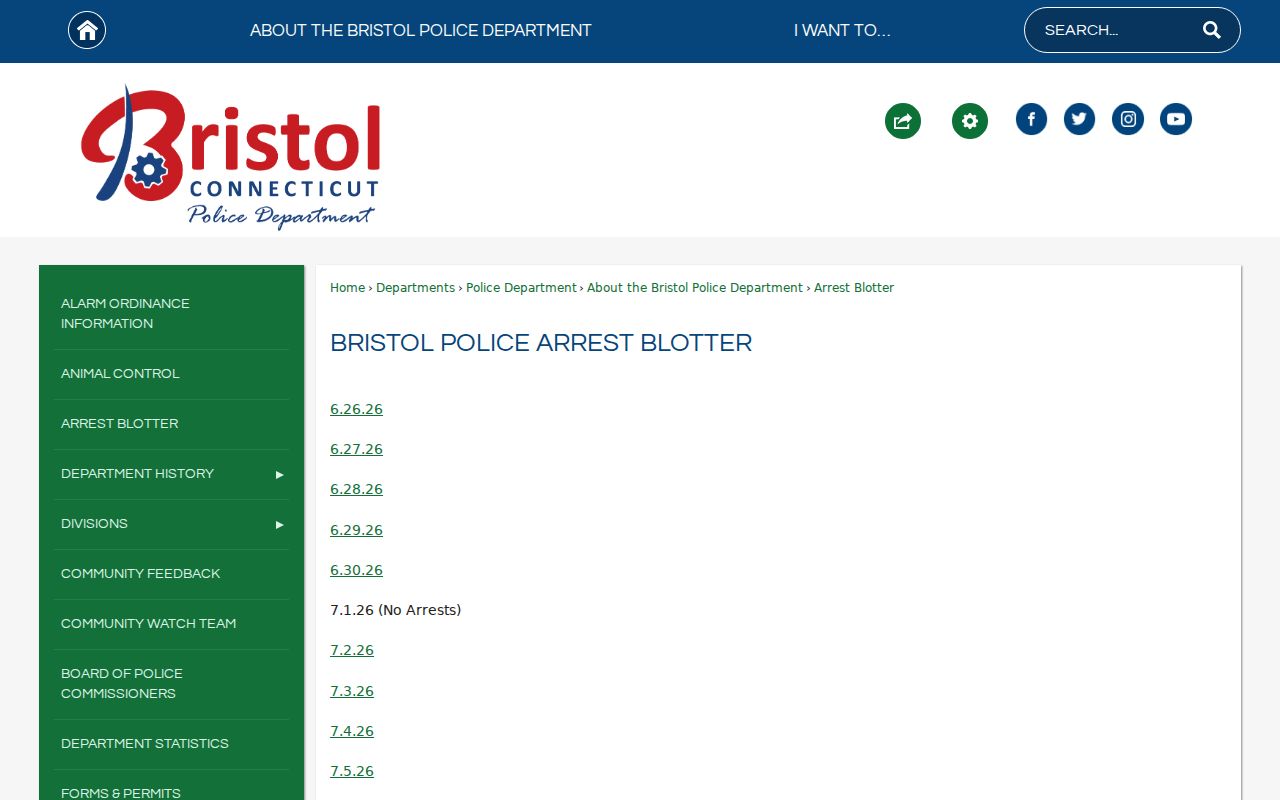
The blotter can point to an arrest event, but the court docket is still needed to see what happened to each charge.
City of Bristol Charge Status
Charge status can change many times after an arrest. A charge can be pending at arraignment, amended by the prosecutor, reduced through negotiation, dropped, dismissed by the court, nolled by the prosecutor, or converted into a conviction after plea or trial. One arrest can have several charges, and each charge can have its own status, disposition, and sentence.
| Status | What It Means |
|---|---|
| Pending | The charge is still active and no final court outcome appears. |
| Amended | The prosecutor or court record changed the charge from the original form. |
| Reduced | The charge became a lesser offense or lower level as the case moved forward. |
| Dismissed | The charge was ended by the court without a conviction. |
| Nolle | The prosecutor chose not to proceed at that time, with Connecticut erasure rules potentially relevant later. |
| Convicted | The charge ended in a guilty plea, finding, or verdict and may have a sentence entry. |
Charges vs Convictions
Arrest records and charge records can contain accusations that never become convictions. That distinction is central to Bristol court charge research. A person may be arrested, a charge may be filed, and later the charge may be dismissed, nolled, amended, or resolved without a conviction. A public search result should be read by charge and by final disposition, not by arrest alone.
| Point | Charge | Conviction |
|---|---|---|
| Meaning | An accusation filed or tracked in the court case. | A guilty result by plea, finding, or verdict. |
| Timing | Appears early in the court case. | Appears after final adjudication of that count. |
| Can change | May be amended, reduced, dismissed, or nolled. | Can trigger sentence, probation, fine, or other court order. |
| Search value | Shows what was alleged after arrest. | Shows the court outcome and legal result. |
Statewide Charge and History Checks
Statewide criminal-history access is not the same as checking a Bristol docket or blotter. The Connecticut Department of Emergency Services and Public Protection provides criminal-history record information channels. The Judicial Branch conviction search shows court conviction information and warns that records can change because of erasure, corrections, pardons, and modifications. These systems serve different needs.
Use the court search to understand pending charges, docket dates, and outcomes in a specific case. Use Bristol Police Records for eligible police reports and local criminal record checks. Use DESPP for official state criminal-history channels. Use DOC offender search only when the question is current correctional custody. The record source should match the purpose of the search.
Sealed and Erased Arrest Records
Connecticut erasure law can affect public access after not guilty findings, dismissals, qualifying nolles after time has passed, pardons, or decriminalized conduct. Sealing is different. A sealed file remains a court or agency record but is restricted by order or statute. Juvenile matters are also confidential under Connecticut law, and Bristol Police does not release incidents that pertain to juveniles.
| Point | Sealed | Erased |
|---|---|---|
| Public access | Blocked or limited by law or court order. | Unavailable for ordinary public disclosure after qualifying events. |
| Record holder | Court, police, or agency may retain restricted access. | Public systems may remove or suppress the record. |
| Common examples | Juvenile, sensitive, protected, or court-sealed material. | Dismissed, not guilty, pardoned, decriminalized, or qualifying nolled cases. |
| Practical check | Ask the clerk or counsel about a court order or statute. | Confirm disposition and timing with the court or legal counsel. |
The Connecticut juvenile matter confidentiality statutes are one major reason some arrest or charge information is not open to the general public.
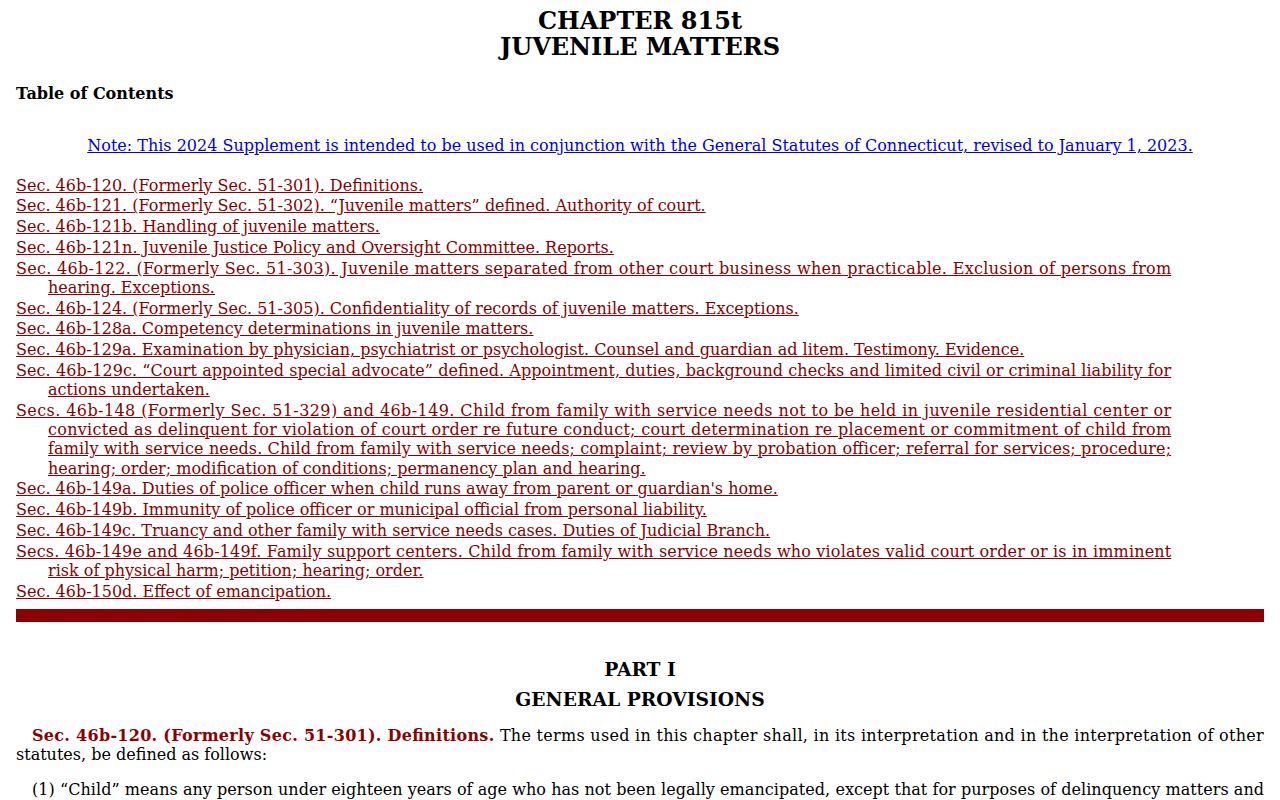
Those confidentiality rules are separate from ordinary adult criminal charge lookups and must be treated as access limits, not search errors.
Charge Codes and Severity
Charge records often include statute references and offense descriptions. Connecticut criminal cases may involve felonies, misdemeanors, infractions, and motor vehicle offenses. The New Britain State's Attorney page explains that Part A prosecution handles more serious matters, mostly class A or B felonies from the judicial district, while geographical-area Part B prosecution handles many class C, D, and E felonies, misdemeanors, infractions, and motor vehicle offenses.
Severity affects where the case is handled, how the docket moves, and what sentence range may apply, but a public docket entry is not legal advice. One arrest can produce a mix of offense levels. The safest reading method is to list every charge, note its statute and status, then check the disposition for each count rather than relying on the most serious original accusation.
Restricted Bristol Charge Records
Access limits can come from several sources. Bristol Police restricts release of arrest reports until all charges are adjudicated in court. The department also states that juvenile incidents are not released, and police reports involving medical information, sexual assaults, and uncorroborated allegations are not released by the department. Court records may be sealed, erased, redacted, or limited by juvenile confidentiality.
For a pending case, a docket may show a public court date while the police report is still withheld. For an old case, the conviction search may no longer show a qualifying erased matter. For a juvenile case, public access may not exist at all. When the result matters for court, employment, licensing, immigration, custody, or professional review, obtain the official record from the agency that holds it and verify the current status.